The Science of Grounding: What the Research Actually Shows
Grounding - or earthing - has become a popular wellness habit, and like any popular habit it attracts both enthusiastic claims and healthy skepticism. So what does the research actually say? This article takes an honest look at where the evidence stands, what is still uncertain, and how to think about grounding without overpromising.
What researchers have looked at
Over the past two decades, a modest number of small studies have explored grounding. Most have measured things like comfort during sleep, perceived stress, muscle soreness after exercise, and various physiological markers. Some of these studies reported positive changes; others were inconclusive. It is a young field, the sample sizes are usually small, and the results have not yet been confirmed by the kind of large, long-term trials that turn an idea into established science.
Why the picture is still incomplete
There are practical reasons the evidence is limited. Grounding is hard to study with a perfect placebo - it is difficult to make a participant believe they are grounded when they are not. Funding for research on a low-cost, non-patentable practice is also scarce. None of this means grounding does nothing; it simply means the scientific story is not finished. Honest enthusiasm and honest caution can coexist.
What we can say with confidence
A few things are not in dispute. The earth carries a subtle electrical charge. Direct skin contact with the ground, or with a properly grounded surface, allows your body to reach the same electrical potential as the earth. And many people who practice grounding report that it simply feels good - calmer, more settled, easier to wind down. Those subjective experiences are real to the people having them, even where the mechanism is still being studied.
How to read grounding claims online
If you spend time reading about earthing, you will encounter some dramatic promises. A useful filter:
- Be cautious with any source that claims grounding cures or treats a specific disease.
- Favor language about comfort, relaxation, and everyday wellbeing over miracle outcomes.
- Remember that personal testimonials are encouraging but are not the same as controlled evidence.
At Groundium we would rather under-promise. We think grounding is a small, pleasant, low-cost habit worth trying - not a replacement for sleep, movement, or medical care.
A reasonable way to think about it
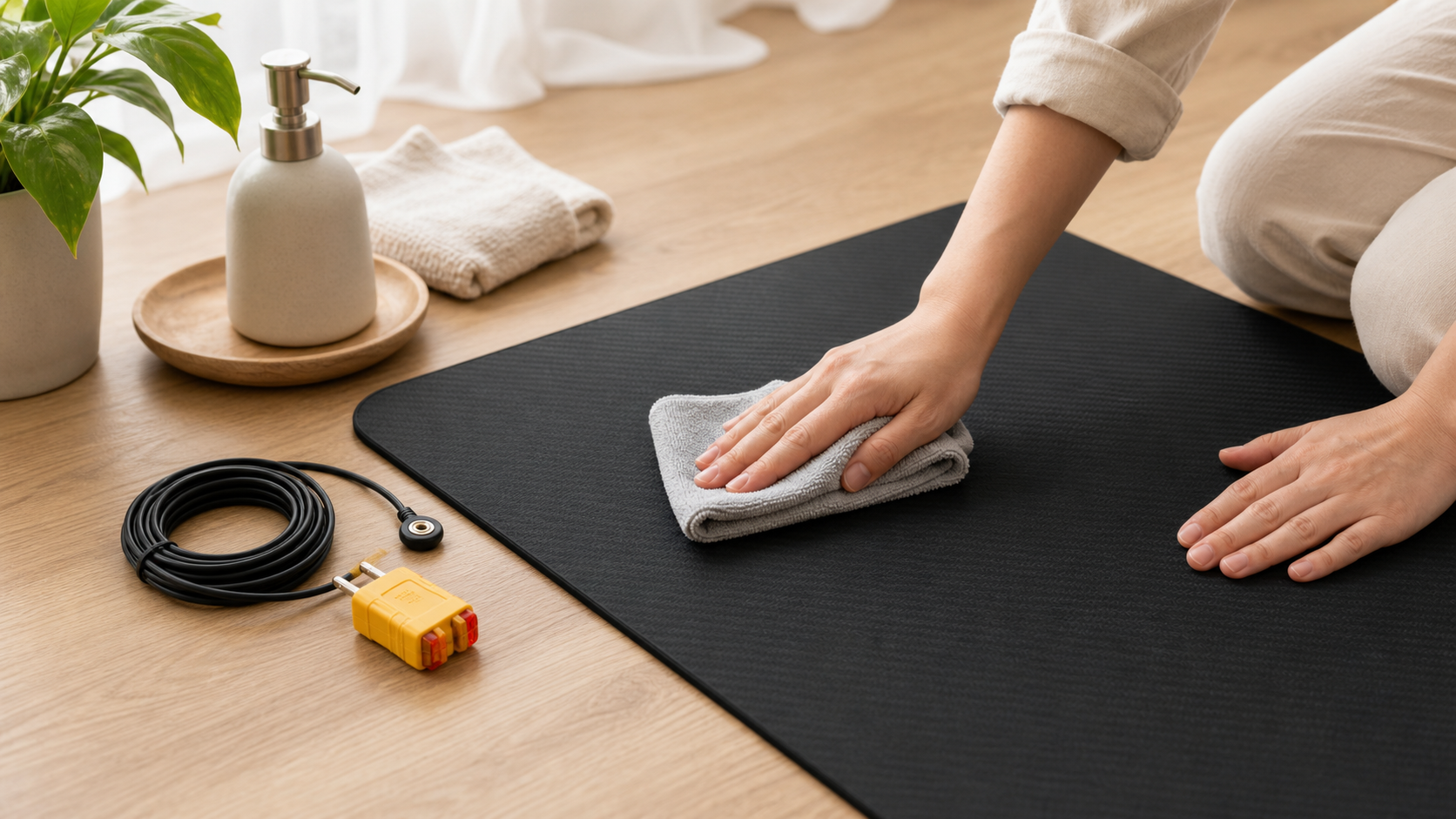
If grounding appeals to you, the sensible approach is to treat it like any gentle wellness routine: try it consistently for a few weeks, pay attention to how you feel, and keep it if it adds something to your day. A grounding mat such as the Groundium GM46 makes that experiment easy to run indoors, where most of us spend our time, without waiting for good weather or bare-foot-friendly ground outside.
The bottom line
The research on grounding is promising in places, thin in others, and ongoing. The most reliable reason to ground is also the most modest one: it is simple, inexpensive, and many people enjoy how it feels. That is reason enough to try it for yourself, with clear eyes and no exaggerated expectations.
Explore the Groundium Grounding Mat (GM46) →
This article is for general information only. Groundium grounding products are not medical devices and are not intended to diagnose, treat, cure, or prevent any disease. Individual results may vary, and grounding is not a substitute for professional medical advice.