Article: What Is Grounding (Earthing)?
What Is Grounding (Earthing)?

Grounding — also known as earthing — is the practice of reconnecting your body to the earth’s natural electrical surface through direct skin contact. It sounds almost too simple to matter, yet for most people living and working indoors it almost never happens anymore. This guide explains what grounding actually is, the thinking behind it, what it feels like, and how to bring it into everyday life without overcomplicating things.
A connection we used to take for granted
For most of human history, people were in near-constant contact with the ground. We walked barefoot, sat on the earth, worked the soil, and slept on natural materials close to it. Modern life quietly removed that contact. Rubber and plastic shoe soles, raised wooden and tiled floors, carpet, and high-rise buildings now insulate us electrically from the planet for almost the entire day. For many people, days or even weeks pass without their bare skin ever touching the earth.
The idea, in plain terms
The surface of the earth carries a subtle, continuous negative electrical charge, replenished by natural processes such as lightning and solar activity. When bare skin touches the ground — grass, soil, sand, or unsealed concrete — your body and the earth can equalize electrically. People who study earthing describe this as the body settling into a more stable electrical state. People who simply practice it tend to describe it in everyday language: calmer, more settled, a little more put-back-together at the end of the day.
It is worth being honest here. Grounding is an area of ongoing research and personal experience, not a miracle cure for anything. The most reliable reason people keep doing it is the simplest one — it feels good, it costs almost nothing, and it is easy to fit into a normal day.
Why we lose the connection indoors
The materials that make modern life comfortable are mostly insulators. Rubber soles, synthetic carpet, sealed floors, and bed frames all block the gentle electrical exchange that used to happen naturally. Air conditioning, sealed windows, and busy schedules mean many of us are indoors more than 90% of the time. None of this is a problem to panic about — it is just a reason that intentional grounding has become something people choose to add back in.
Ways to ground
Outdoors
The original method is free: stand, walk, or sit with bare feet on grass, soil, sand, or natural water. Twenty to thirty minutes is a common starting point. The catch is obvious — weather, seasons, city living, and time rarely cooperate.
Indoors with a grounding mat
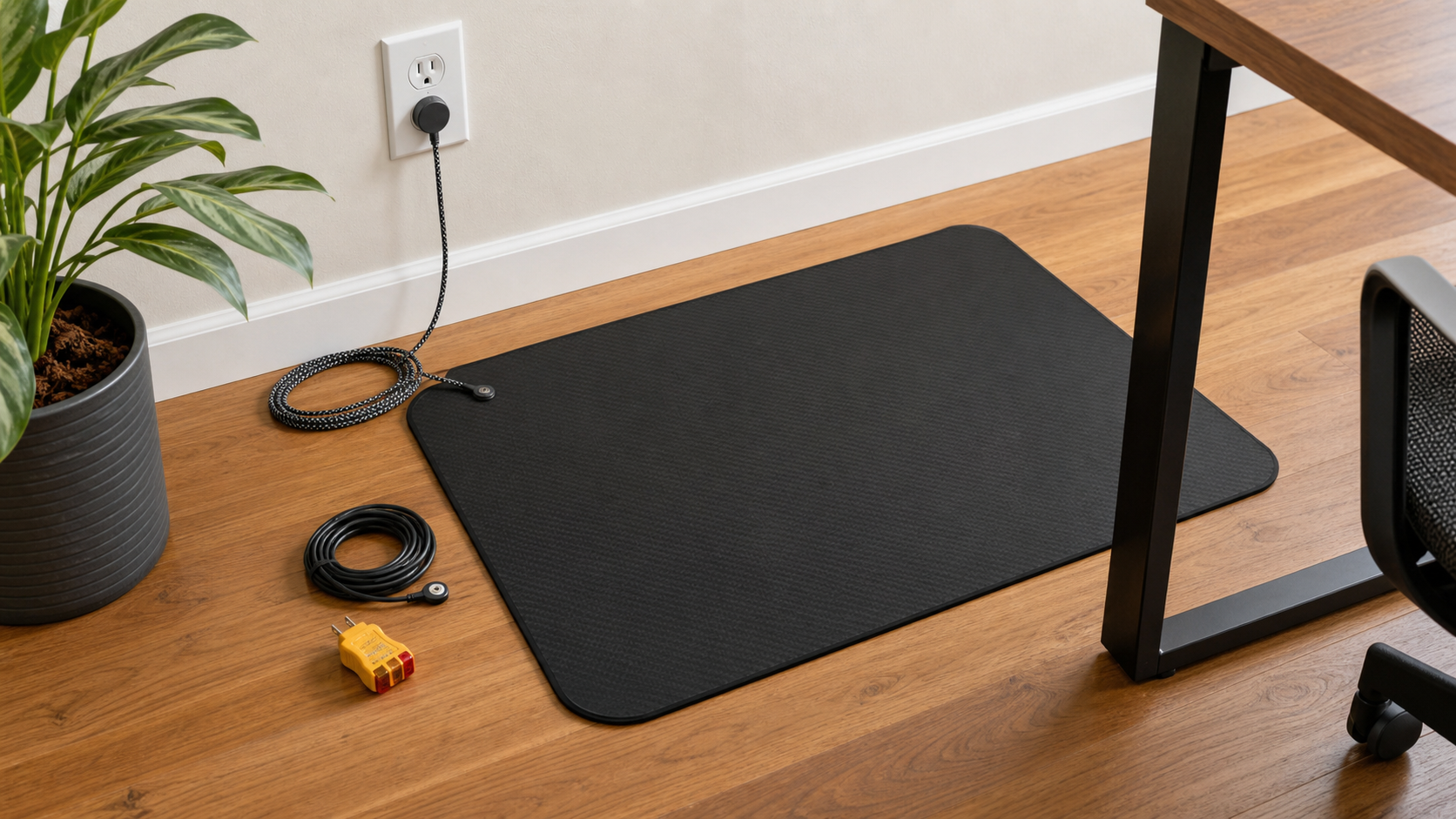
This is where an indoor solution helps. A grounding mat such as the Groundium GM46 connects to the grounding port of a standard wall outlet, which is itself connected to the earth through your home’s electrical ground. Resting bare skin on the mat recreates that earth connection without going outside. You can use it under your feet at a desk, on the floor while you stretch, or at the foot of the bed.
What grounding feels like
Most people do not feel a dramatic switch flip. The experience is usually quiet: a sense of relaxing, of the shoulders dropping, of being a little more present. Some notice it most in the evening as part of winding down. Others simply like knowing they have added a small, natural habit back into a very indoor lifestyle.
A simple 7-day way to start
- Day 1: Test your outlet with a ground tester and set up your mat where you already sit.
- Days 2–4: Rest bare feet or hands on the mat for about 30 minutes while you read, work, or relax.
- Days 5–7: Try grounding at the same time each day so it becomes a habit, and notice how you feel.
Common questions
How long should I ground each day? Thirty minutes or more is a common routine, but consistency matters more than duration.
Can I ground while I sleep? Yes — many people keep a mat at the foot of the bed and rest their feet on it.
Is it safe? A quality mat connects you only to ground, never to electrical current. The GM46 includes a built-in 1 megaohm resistor for exactly this reason.
Explore the Groundium Grounding Mat (GM46) →
This article is for general information only. Groundium grounding products are not medical devices and are not intended to diagnose, treat, cure, or prevent any disease. Individual results may vary, and grounding is not a substitute for professional medical advice.